

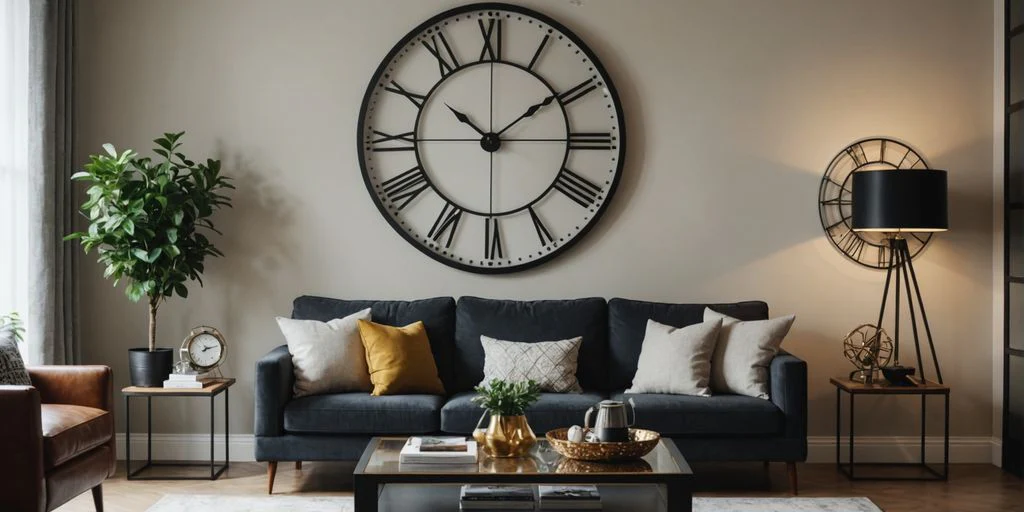
Large wall clocks have evolved well beyond their practical purpose. Today, they are bold design statements—pieces that anchor a room, draw the eye and bring cohesion to an interior. When styled thoughtfully, a large wall clock can become the focal point that elevates an entire space rather than simply filling a blank wall.
In Australian homes, where open-plan living and generous wall space are common, oversized clocks are particularly effective. Whether your style leans contemporary, industrial or classic, the right clock can introduce balance, texture and personality. Brands like Jadco Time are often chosen for this very reason—timeless design paired with strong visual presence that feels intentional rather than overpowering.
Why Large Wall Clocks Work So Well
A focal point gives a room structure… without one, even beautifully furnished spaces can feel unfinished. Large wall clocks naturally command attention thanks to their scale, but unlike artwork, they also serve a practical role—making them a functional design choice rather than a purely decorative one.
Because clocks combine form and function, they tend to feel less indulgent than oversized art, while still delivering impact. They also bring rhythm to a space, subtly reinforcing symmetry and proportion.
Choosing the Right Wall for Impact
Placement is just as important as the clock itself – for maximum effect, choose a wall that already carries visual weight or needs definition. Common placements include:
- Above a sofa or sideboard in the living room
- On a feature wall in an open-plan dining area
- As a centrepiece in a hallway or entryway
- On a wide kitchen wall where cabinetry stops short
Avoid cluttered walls or areas with competing focal points. A large clock needs breathing room to shine.
Matching Clock Style to Interior Design
To feel cohesive, your clock should echo elements already present in the room.
- Modern interiors suit clean lines, minimal numerals and neutral tones such as black, white or brushed metal.
- Industrial spaces pair well with exposed mechanisms, raw finishes and oversized Roman numerals.
- Classic or Hamptons-style homes benefit from softer colours, elegant detailing and traditional faces.
- Rustic or farmhouse interiors are complemented by timber finishes and distressed textures.
Think of the clock as an extension of your existing palette rather than a standalone piece.
Size, Scale and Proportion Matter
A common mistake is choosing a clock that is large—but not large enough. If the clock is intended to be a focal point, it needs to hold its own against surrounding furniture and wall height. As a general guide:
- Large feature walls call for clocks 60cm and above
- Standard living room walls suit clocks between 50–70cm
- Entryways and hallways often benefit from oversized designs that create immediate impact
When in doubt, err on the larger side. A clock that feels too bold at first often settles beautifully once styled.
Styling Around Your Clock
Once your clock is in place, style the surrounding area with restraint. Let the clock lead.
You might:
- Keep nearby décor low-profile to avoid visual competition
- Use symmetry—such as matching lamps or décor pieces below—to reinforce balance
- Echo materials from the clock elsewhere in the room for cohesion
Avoid over-accessorising. A well-chosen large wall clock works best when it’s allowed to stand confidently on its own.
A Timeless Design Choice
Large wall clocks are one of the few décor elements that transcend trends. They add structure, warmth and personality while remaining practical—an ideal combination for modern Australian homes. When thoughtfully selected and positioned, they become more than décor; they become defining features that bring a room together effortlessly. If you’re looking to introduce a focal point that feels both purposeful and enduring, a large wall clock is a timeless place to start.